Leave My Ludo Alone: Why Reskinning Indian Games for America Misses the Point
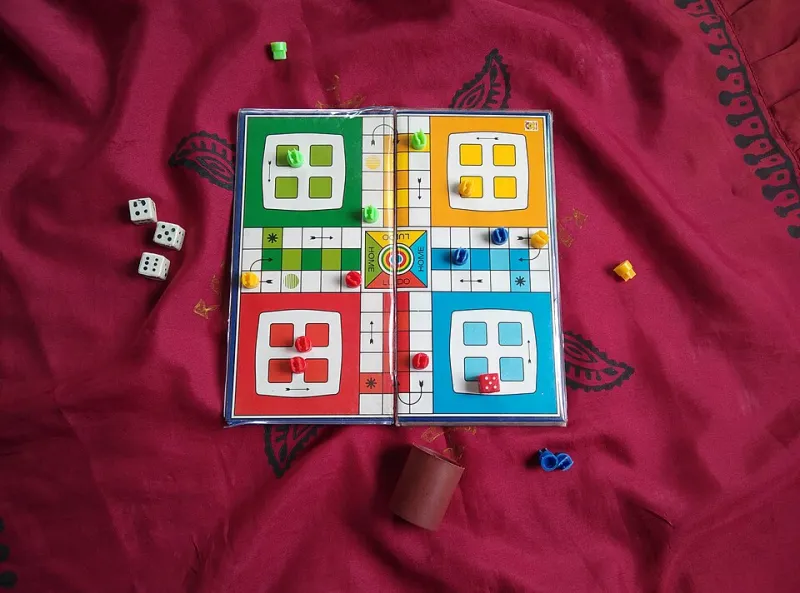
Photo: Adib, CC BY-SA 4.0, via Wikimedia Commons
I do not want a hamburger on my Ludo board. I do not need a baseball diamond instead of a carrom board, or a California sunset where a rangoli pattern used to be. And I really do not need a Diwali event rebranded as a generic winter festival because someone in a boardroom decided American players could not handle a holiday they had not heard of.
This is not a knock on localization. Localization is good. It is the difference between a game that works for a new audience and a game that assumes the audience is too lazy to learn anything. The problem is over-localization: the habit of sanding off every edge that makes an Indian game feel Indian, then calling the result accessible.
The reskin instinct
It usually starts with good intentions. A studio looks at the US market and sees opportunity. It looks at its own game and sees unfamiliar references. So it swaps in familiar ones. The logic sounds reasonable: meet players where they are.
But meet them halfway, not after you have already replaced the furniture. There is a difference between translating a rulebook and repainting the whole house.
I have watched this happen with card games, board games, and casual puzzlers. A beautiful Indian art style gets replaced with a generic cartoon look. Regional festival events become vague seasonal sales. The food in the loading screen becomes pizza. The names change. The music softens. The game becomes perfectly fine, and completely forgettable.
The worst part is that the reskin often does not even work. Players are not stupid. They can tell when a game has been scrubbed clean of its identity. And when the only thing left is a familiar skin on top of unfamiliar mechanics, the whole thing feels like a product instead of a place.
What actually hooks players
Here is the thing I keep coming back to: the reason a lot of American players try Indian games in the first place is that they are different. The rules are different. The art is different. The rhythm is different. That difference is not a bug to be patched out. It is the feature.
When a carrom game keeps its wooden board texture and its satisfying flick, it feels specific. When a Ludo game uses the classic board layout and the familiar little tokens, it feels like a game with a history. When a studio runs a Diwali event with lamps, rangoli, and sweet boxes, it gives players a window into something they might not see otherwise. That is cultural exchange, and it is a lot more interesting than a discount code with a snowflake on it.
Authenticity also pays off in retention. A generic game competes with every other generic game. A game with a clear identity gives players something to remember, talk about, and return to. The texture is the marketing. You do not need to explain why the board looks the way it does if the board looks great.
Localization that helps without erasing
To be clear, I am not arguing for zero localization. Some changes make a game better for a new audience without gutting its character.
Language options are good. Clear tutorials are good. Fair monetization is good. Time zone support, accessibility settings, and responsive customer service are good. These are additive. They invite people in instead of pretending the game was never from somewhere else.
There is also a difference between explaining a cultural reference and deleting it. A short tooltip about a festival is fine. A note that explains why the board has four quadrants is fine. What is not fine is replacing the reference entirely because someone assumed it would not land.
American players are curious. That is one of the best things about this market. They try new foods. They watch subtitled movies. They listen to music in languages they do not speak. The idea that they will bounce off a game because the board has a rangoli pattern on it is not just condescending. It is bad business.
The cost of sanding off the edges
When you over-localize, you lose more than art. You lose the story a game tells about where it came from. You lose the small discoveries that make a new game feel like a place worth exploring. You lose the reason a player might recommend it to a friend: not because it is another match-three game, but because it is a match-three game with a Diwali festival and a carrom board and a soundtrack that actually sounds like something.
You also make it harder for the game to stand out. The US mobile market is crowded with games that look like everything else. A game that looks like itself has a better chance.
And there is a fair argument that over-localization can make a game feel inauthentic to its original audience too. Indian players notice when a festival event becomes a generic sale. They notice when the art loses its regional flavor. The result is a game that belongs to no one in particular, which is a strange thing to aim for.
Let Indian games stay Indian
So here is my pitch to studios: trust your game. Trust the players. Keep the original rules. Keep the regional art. Keep the language options, but do not erase the language. Run the festival events. Let the board look like a board that has been played on for generations.
And here is my pitch to US players: ask for authenticity. When you see a game that has been reskinned into something generic, say something. When you find a game that keeps its identity, support it. The best version of this market is not one where every Indian game looks American. It is one where American players get to meet Indian games on their own terms.
I do not need my Ludo to look like a backyard barbecue. I need it to look like Ludo. That is the whole point.