Designed for Everyone: How Indian Mobile Games Are Quietly Leading the Accessibility Revolution
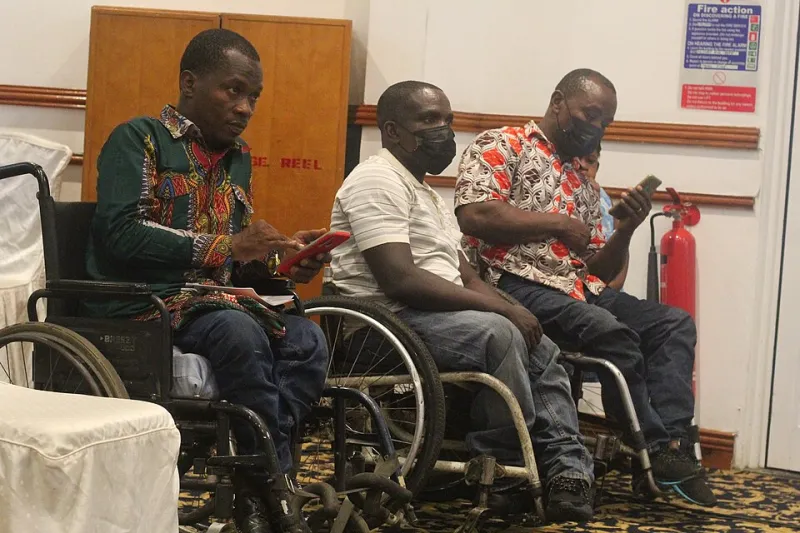
Photo: Uprising Man, CC BY-SA 4.0, via Wikimedia Commons
There's a quiet shift happening in mobile gaming, and it didn't start in San Francisco or Seattle. It started in Pune, Bengaluru, and Hyderabad — in studios that understood early on that a game nobody can play isn't really a game at all.
Indian mobile developers have been building accessible, inclusive experiences long before accessibility became a buzzword in Western gaming circles. And US players with disabilities are starting to notice — not because of some marketing campaign, but because these games simply work for them in ways that a lot of mainstream titles don't.
Why Indian Studios Think About Accessibility Differently
Here's something worth understanding about the Indian mobile gaming market: it's enormous, diverse, and full of players using wildly different devices in wildly different environments. A developer building for India has to account for someone playing on a budget Android phone in bright afternoon sunlight, someone else dealing with a cracked screen, and millions of players who may have limited literacy in certain languages.
That pressure to design for real-world variation — not ideal conditions — ends up producing games that are more adaptable by nature. When you've already had to think hard about contrast, font size, control flexibility, and interface clarity just to reach your core audience, you've done a huge chunk of accessibility work without even calling it that.
That's the key insight: accessibility wasn't a separate checklist for many Indian studios. It was baked into the design problem from day one.
Colorblind-Friendly Design That Actually Holds Up
Let's talk specifics. Colorblindness affects roughly 8% of men and 0.5% of women in the US — that's millions of players who routinely encounter mobile games that are essentially broken for them because the entire UI relies on red-green distinctions.
Indian game developers, particularly those building card games, puzzle titles, and strategy games, have leaned heavily on high-contrast palettes, shape-based differentiation, and pattern overlays that go well beyond a simple "colorblind mode" toggle. Rummy apps, for example, often display suit indicators using both color and symbol weight, so a player who can't distinguish red from green can still read a hand instantly.
Some studios have gone further, offering multiple color palette presets — not just one generic "colorblind mode" — because deuteranopia, protanopia, and tritanopia are genuinely different experiences that deserve tailored solutions.
Adaptive Controls: A Big Deal for a Lot of Players
For players with motor disabilities, fine-touch precision requirements can make a game completely inaccessible. Swipe-heavy mechanics, small tap targets, and timed inputs that demand split-second reactions can shut out a significant portion of potential players.
Indian casual and skill-based games have quietly developed some of the most flexible control schemes in mobile gaming. Many titles allow players to adjust tap target sizes, extend or eliminate timers on non-competitive modes, and remap gesture controls to simpler single-tap interactions. This kind of granular control customization isn't always advertised loudly, but it's there — and players who need it find it fast.
The cultural context matters here too. In India, gaming sessions often happen in shared family spaces, sometimes with older relatives watching or even participating. Designing controls that work for a 65-year-old who's never owned a smartphone isn't just nice to have — it's a business requirement. And that same design thinking translates directly into games that work for players with limited hand mobility or dexterity challenges.
Audio Accessibility and the Multilingual Advantage
Indian games are built for a multilingual world. When your home market spans 22 official languages and hundreds of regional dialects, you get very good at designing interfaces that don't rely solely on text. Icon-based navigation, audio cues, and visual feedback loops become essential tools — and those tools happen to be exactly what players with dyslexia, low literacy, or visual impairments benefit from most.
Several Indian gaming platforms have introduced full audio narration for menu navigation, something that many Western mobile games still haven't implemented despite years of accessibility advocates pushing for it. Text-to-speech integration, adjustable audio cue volumes, and haptic feedback systems that communicate game state without requiring visual attention are increasingly standard features rather than premium add-ons.
What US Players With Disabilities Are Actually Saying
Scroll through disability gaming communities on Reddit, Discord, and Twitter and you'll find a growing thread of players discovering Indian mobile games almost by accident — and then becoming loyal fans specifically because of how well the games accommodate them.
Common themes: the text is actually readable. The color choices don't cause eye strain. The controls don't require the kind of precision that makes sessions painful. The games don't punish you for playing slowly or taking breaks. These aren't small things. For a player managing chronic pain, low vision, or a motor condition, these details are the difference between being able to play at all or not.
One player in a low vision gaming community put it simply: "I stopped trying to force myself through games that weren't made for me. Then I found a rummy app and I've been playing it every day for six months."
The Broader Lesson for the Industry
The mainstream gaming industry — including major US studios — has made real progress on accessibility in recent years. Microsoft's Xbox Adaptive Controller is a landmark achievement. Games like The Last of Us Part II set a new bar for accessibility options in AAA titles. That progress is genuine and worth celebrating.
But the mobile space has lagged behind, and Indian developers have quietly been filling that gap. Not because they set out to become accessibility champions (though some absolutely have), but because their design process naturally produces more flexible, adaptable, forgiving games.
The lesson is straightforward: when you design for the most constrained user in your audience, you end up with a better product for everyone. Indian studios figured that out by necessity. Now the rest of the industry is starting to catch up.
Playing Without Barriers
At Tiranga Games App, we think a lot about what makes Indian mobile games special — the cultural richness, the design philosophy, the sheer variety. But one of the things that keeps coming up when we talk to players is how welcoming these games feel. Not just culturally, but practically. They meet you where you are.
If you're a US player who's been frustrated by games that seem designed for someone with perfect vision, perfect motor control, and a brand-new flagship phone — give Indian mobile games a serious look. You might find that someone already thought about you when they built it.