Play Together, Log In Separately: How Indian Mobile Games Cracked the Code on Friendship at a Distance
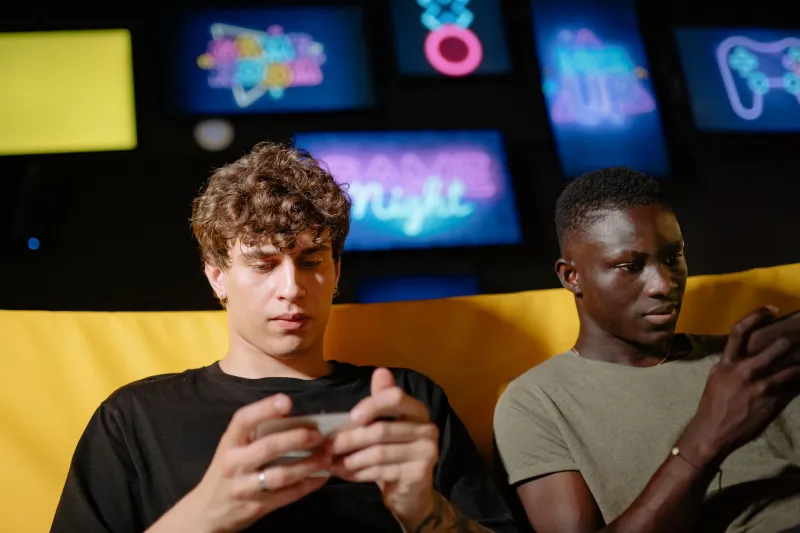
Think about the last time you tried to organize an online gaming session with your college friends. Someone's on the East Coast, someone moved to Denver, someone just had a kid, and the one person with free time is somehow always in a different time zone. Coordinating a live multiplayer match starts feeling less like fun and more like scheduling a board meeting.
Indian mobile gaming developers noticed this problem a long time ago — and they built around it.
The result is a generation of games that treat asynchronous play not as a compromise, but as a feature. And in doing so, they've quietly invented what might be the most socially intelligent multiplayer model in the industry.
The Problem With "Live or Nothing"
Western game design has historically been obsessed with real-time multiplayer. From console shooters to mobile battle royales, the implicit assumption is that playing together means playing at the same time. That works great when your friends are all 19, living in the same dorm, and have nothing better to do on a Tuesday night.
But most adults don't live that life. The US Census Bureau consistently reports that Americans are moving more frequently and living farther from family and close friends than any previous generation. The average American lives 18 miles from their mother — and that number doesn't even account for friend groups, which scatter even further after college.
Indian game developers, building for a country with 22 official languages, enormous regional diversity, and millions of players on unpredictable data connections, never had the luxury of assuming everyone would be online simultaneously. So they didn't design that way.
What Asynchronous Multiplayer Actually Looks Like
If you've never played an Indian-developed card or strategy game, the mechanics might surprise you. Take something like a turn-based Rummy game on a platform like Tiranga Games App. You make your move. Your opponent — who might be your cousin in another state, or your work friend who plays during their lunch break — gets a notification, takes their turn whenever they're ready, and sends it back.
There's no pressure. No waiting in a lobby. No rage-quitting because someone's connection dropped. The game exists in the background of your day, surfacing when it's your turn, disappearing when it isn't.
This isn't just a technical workaround. It's a fundamentally different philosophy about what games are for.
"The game should fit into your life, not the other way around," is a sentiment you hear repeatedly from Indian developers when they talk about design priorities. Games built on this principle end up feeling less like obligations and more like ongoing conversations.
Guild Systems That Actually Mean Something
Beyond turn-based mechanics, Indian gaming platforms have invested heavily in guild and group systems that create a sense of shared identity without demanding constant activity.
In many Western games, guilds or clans are primarily functional — you join one to get better matchmaking or access to group raids. In Indian-developed platforms, the social layer is often the point. Guilds celebrate member milestones. Players send each other in-game gifts just because. There are group challenges that accumulate contributions over days or weeks, not hours.
These mechanics tap into something deeply human: the desire to be part of something without having to show up perfectly every single day. You can contribute when you have time, cheer on your guild mates when you don't, and still feel like you belong.
For Americans using these platforms to stay connected with family — particularly South Asian-American families maintaining ties across generations and time zones — this hits differently than any Discord server or group chat ever could.
The Gifting Economy Nobody Talks About
One of the most underappreciated mechanics in Indian mobile gaming is the gifting system. On many platforms, players can send in-game items, currency boosts, or power-ups to friends and family members as a gesture of goodwill or celebration.
This sounds minor. It isn't.
Gifting creates micro-moments of connection that feel personal in a way that a like on a social media post simply doesn't. Your aunt sends you a lucky charm before a big tournament. Your college roommate drops extra coins in your account on your birthday. These aren't game-breaking advantages — they're digital expressions of care.
Game designers who've studied these mechanics note that gifting dramatically increases session frequency among players who are connected to active gifters. But more importantly, it transforms the game from a solo activity into an ambient social network — one that's actually enjoyable to participate in.
Why This Model Is Going Mainstream
Here's the part Western game studios probably don't want to hear: this approach is winning.
American players with older friend groups, demanding careers, or young families are increasingly gravitating toward games that accommodate their actual schedules. The explosive growth of mobile card games, word games, and casual strategy titles in the US isn't accidental — it's a direct response to the failure of live multiplayer to serve anyone who isn't a teenager with infinite free time.
Indian gaming platforms figured this out years ago. They built the infrastructure, refined the mechanics, and proved the model works at scale. Now, as more American players discover titles on platforms like Tiranga Games App, they're finding something they didn't know they were looking for: a way to play with the people they love, on their own time, without anyone having to sacrifice sleep or reschedule their Wednesday.
The Bigger Picture
There's something almost philosophical about what Indian game developers have built here. In a world that increasingly demands real-time presence and constant availability, they made games that say: it's okay to play at your own pace. Your friendship doesn't expire if you don't log in tonight.
That's not just good game design. That's a pretty healthy message, honestly.
And for millions of players — whether they're in Mumbai or Minneapolis — it's exactly what they needed to hear.