Invisible Origins: Why American Gamers Are Obsessed With Indian Games They Don't Even Know Are Indian

The Game That Nobody Knew Was Indian
Picture this: you're on your lunch break in Cincinnati, hammering away at a card game you found through a friend's recommendation. The interface feels clean. The difficulty curve doesn't spike into rage-quit territory. You're having fun, and you keep coming back. Three months later, someone mentions offhand that the studio behind it is based in Pune. Your reaction? Probably a shrug and another round.
That reaction — unbothered, curious maybe, but ultimately unbothered — is the quiet engine powering one of mobile gaming's most fascinating stories right now. Indian-developed games are pulling massive numbers in the US market, and a significant chunk of their player base has no idea they're engaging with something built on the other side of the planet. More importantly, they don't care. And that's not an accident.
Intentional or Emergent? Developers Weigh In
When you ask Indian game developers whether cultural identity is a deliberate design choice or something that just bleeds through naturally, you get answers all over the map — which is itself pretty telling.
Some studios are completely transparent about their origins and lean hard into them. Others take a more universal approach, building around mechanics and user experience first, letting cultural texture exist as seasoning rather than the main course. A product lead at a mid-sized Bangalore studio described it this way: "We're not trying to hide where we're from. But when we sit down to design, we're thinking about what makes a player feel rewarded, what makes them feel respected. Those aren't Indian values. Those are just good values."
That framing — good design as a culturally neutral language — comes up again and again in conversations with developers. The studios that have cracked the US market without explicit cultural branding tend to share a common thread: they treated their home audience as a proving ground for universal principles, not a niche to serve and move on from.
What "Flying Under the Radar" Actually Looks Like
There's a difference between a game that hides its origins and a game that simply leads with something else. The most successful Indian titles in the American market tend to lead with the experience — the tactile satisfaction of a well-timed move, the fairness of the reward structure, the way the difficulty ramps without ever feeling punishing.
Think about how American players discover games. Recommendations from friends, app store charts, social media clips. None of those discovery channels require a country of origin. If the thumbnail looks compelling and the first ten minutes feel good, you're in. Nationality never entered the equation.
Contrast that with games that lead with cultural identity as a marketing hook. That approach works brilliantly for certain audiences — players who are actively curious about Indian culture, diaspora communities looking for something familiar, gamers who want their entertainment to feel like travel. But it necessarily limits the top of the funnel. You're self-selecting an audience before they've even touched the game.
The studios winning the broadest American audiences have figured out that cultural identity works better as a discovery bonus than an entry requirement. You download the game because it looked fun. You stay because it plays great. Then, somewhere along the way, you find out it was built in Hyderabad, and that becomes a cool piece of trivia rather than a barrier.
The Design DNA That Gives It Away (If You Know What to Look For)
Here's the paradox buried inside the paradox: even the games that don't market their Indian origins are unmistakably shaped by them. You just have to know where to look.
Indian mobile game design tends to carry a few signatures that Western-built equivalents often lack. Progression systems that feel genuinely fair, not engineered to frustrate you into a purchase. Visual languages that use color with intention and warmth rather than the clinical minimalism that dominated Western app design for the better part of a decade. Multiplayer structures that feel social in a way that goes beyond leaderboards — there's an emphasis on the shared experience, not just the competitive outcome.
None of those qualities scream "made in India" to an American player. But they add up to something that feels different in a way that's hard to articulate. Players describe it as games that "actually respect your time" or "don't feel like they're trying to squeeze you." That perception is the cultural fingerprint, even when the branding is completely neutral.
When Leaning In Works Just as Well
It'd be wrong to suggest that explicit cultural identity is a handicap in the US market. Some of the most enthusiastic American fan communities have built up around games that wear their Indian roots openly — festivals, mythological themes, regional card game traditions that players had never encountered before.
For those titles, the cultural specificity is the product. American players who discover them aren't just downloading a game; they're getting a window into something genuinely unfamiliar, and that novelty has its own magnetic pull. The key is that the underlying game still has to be good. Cultural curiosity gets someone to download; solid mechanics make them stay.
The studios that have figured this out — and there are more of them every year — understand that "Indian game" isn't a genre. It's a point of origin that can inform wildly different approaches depending on what the game is trying to do and who it's trying to reach.
What This Tells Us About Where Mobile Gaming Is Heading
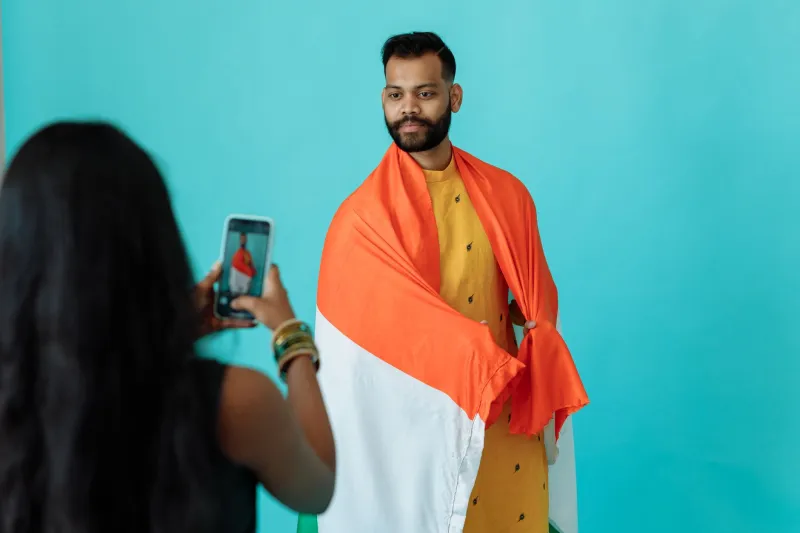
The Tiranga Paradox, as you might call it, is really just a specific version of a broader truth that the global games industry is slowly catching up to: great design has no passport.
For years, the assumption in Western gaming circles was that games needed to be culturally localized to cross borders — adjusted, softened, stripped of anything too regional. Indian developers, often working with smaller budgets and broader ambitions, found a different path. Build something that solves the fundamental problem of making players feel good, and the borders take care of themselves.
American gamers are the beneficiaries of that philosophy right now, whether they know it or not. They're playing games shaped by design traditions, cultural values, and player-first thinking that traveled thousands of miles without ever needing a visa.
And the studios back in Mumbai, Bangalore, and Chennai? They're watching the download numbers tick up and building the next thing. The flag might not be visible in the marketing. But it's woven into every decision that made the game worth playing in the first place.